Showing posts with label cameras. Show all posts

Sunday, December 11, 2016

Happy 6th analogversary!

On December 11th 2010, six years ago, I posted my first film picture on flickr. I took it with a (then) 50 years old Kodak Retinette IA that my mother-in-law gave to us, the first old film camera that I used after some years of digital photography.

These days I have been thinking a lot about what it is that kept me doing what I do (photographically speaking) these last six years. I concluded that, for me, film photography is just the medium, but not the goal. Although I like pictures on film very much, I realized that it is not just about film. In fact, I am not really interested in using any last generation film SLR camera from the late 90s, which would arguably be the easiest and most practical access to film photography nowadays. What I really do enjoy is to take pictures with old cameras. That is my passion. The fact that such cameras do need film is just a happy coincidence. One that makes my commitment to film grow strong.

How old is "old"? Well, I cannot give a definite answer to that question: it depends on the camera. Generally speaking, a full-mechanical camera (no electronics, no batteries) made sometime between the early 20s and the late 70s of the past century can be interesting to me. But I do have (and use) a couple of cameras that are both older (1912) and younger (1989) than that. And not every camera from that period (there are thousands!) makes my heart skip a beat.

There have been few new cameras in this sixth year. For a couple of months I have been busy elsewhere and, in a sense, my old camera passion did recede a little bit on the first half of the year. Mostly because I have been distracted by bicycles. Especially older ones, as it could not be otherwise!
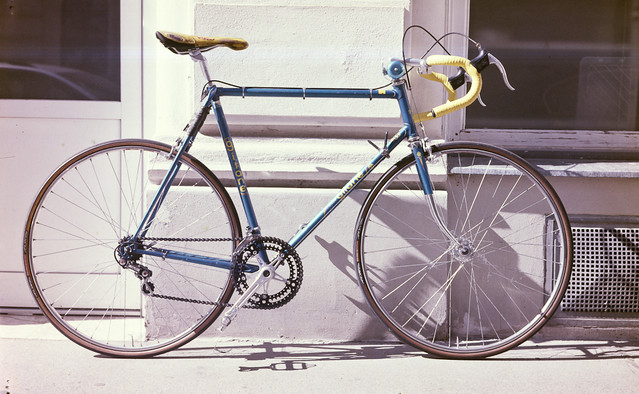
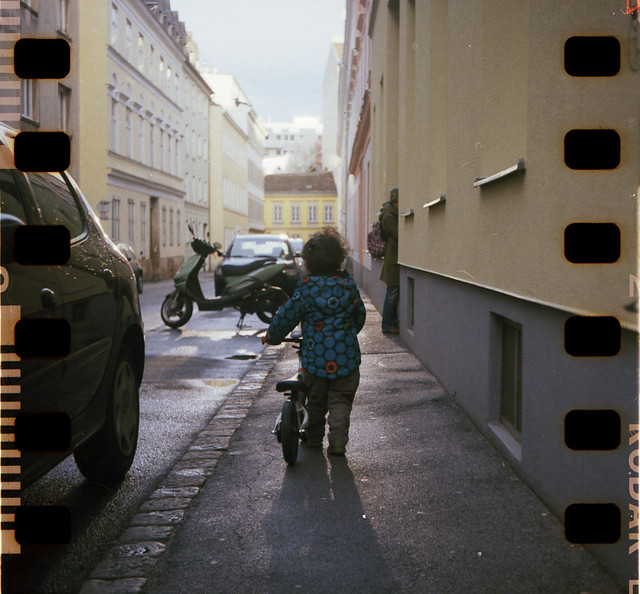
gitane
(Bergheil 9x12, Kodak Ektachrome 200 EPD, expired, ISO 200/24°)

There have been, quite unconsciously and mostly due to good luck, a couple of "redundant improvements" to my photographic stable. With this I mean cameras or lenses that I already had, this time in a new (and, to me, more desirable) fashion. I have long had a 1962 Exakta Varex IIa, the model with the name EXAKTA in block letters over a black background. This year I found another Exakta Varex IIa body, a little older (1957), with the more elegant engraved lettering on the front. Or a 1953 Zeiss Ikon Contessa 533/24, which I already have since 2012, now in a much less battered state and the rare matching leather case. The fact that I have this Contessa as a backup makes me less fearful of tackling with the repairs that my first Contessa needs (frozen slow speed escapement, rangefinder adjustment). Another very lucky strike made me the proud owner of a 1938 Voigtländer Bessa RF, in quite good condition and an intact yellow filter. It sports the most desirable Heliar f/3.5 lens. I already have a Bessa RF with a Skopar lens, which is nice and sharp, but is no Heliar. A couple of Zeiss Ikon Contaflex I, because the lens on them, the coated 45mm f/2.8 Tessar from West German Zeiss, is one of my favorites (it is the one that the Contessa has as well), and I could not resist a camera that allows looking directly through that lens. And finally, a rangefinder 1954 Kodak Retina IIc because it is a kind of bigger sister to our Retinette IA, the one with which everything began.

In this year, too, I managed to get some practical accessories for many of my cameras: leather cases, a 9x12 roll film back much more convenient than the one that I already had, a prism viewfinder for my Exakta Varex IIa and a Leitz VIOOH/Imarect universal external viewfinder for my Leica IIIa, just for the sake of it, because I still have only one lens on Leica screw mount. Ouch, that nasty collector in me... ;)

This year I shot less films than the previous one. There have been 11 rolls in black&white, from which the most shot was Kodak Tri-X 400, then 15 color negative rolls, Kodak Portra 400VC being the one I took most often, and 13 color slide films, from which, surprisingly, the one I shot the most was Kodak Ektachrome 64T in 9x12 sheet film format. A Kodak year, so to speak.
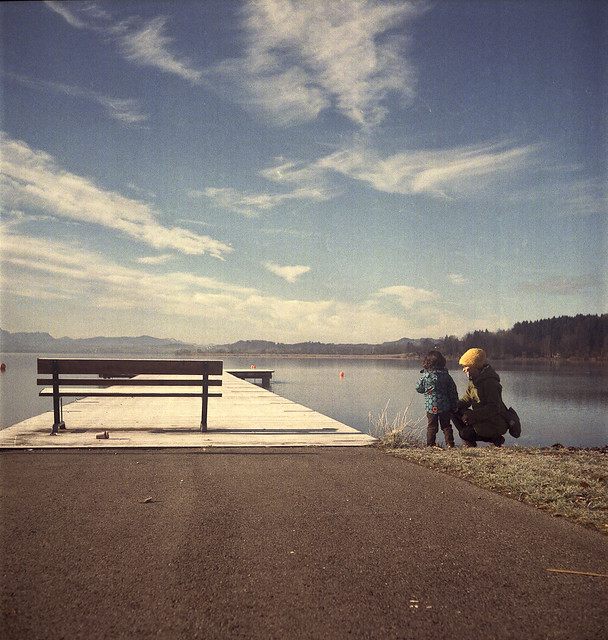
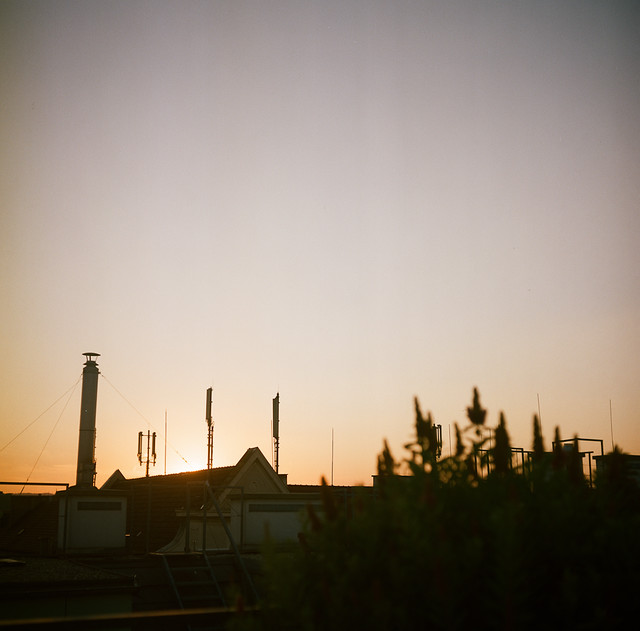
sunday
(Rolleiflex 631, Kodak Portra 400VC, expired, ISO 400/27°)

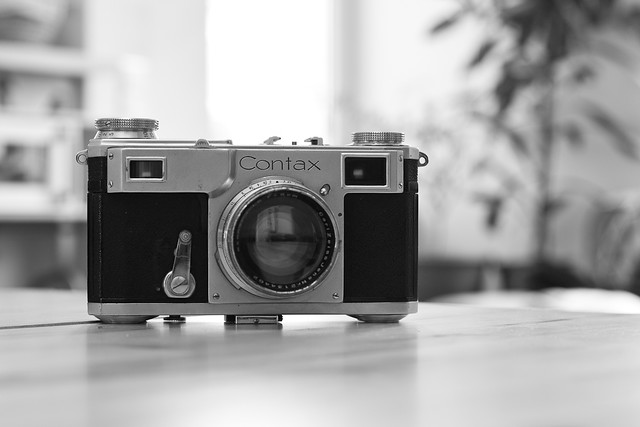
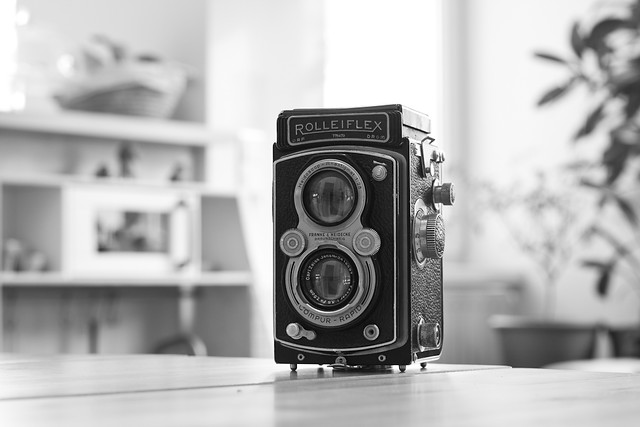
The camera I took most often was my Rolleiflex Automat 631 (8 films), followed one more year by the Contax II (6 films) and, quite worth mentioning, the Bergheil 9x12 plate camera with sheet film (4 sheets).

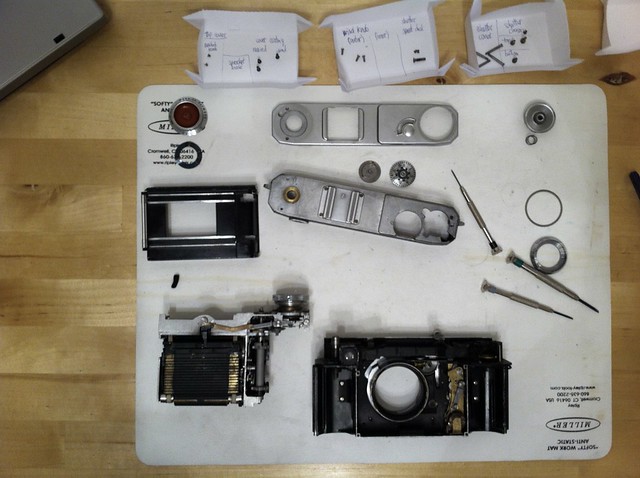
I am happy that this year I found the strength to keep servicing and repairing my cameras. Even though I took it again after a long pause just a couple of months ago (as I said, I have been busy/distracted servicing and repairing old bicycles), I found again excitement and peace in delving into the depths of a number of cameras and shutters.

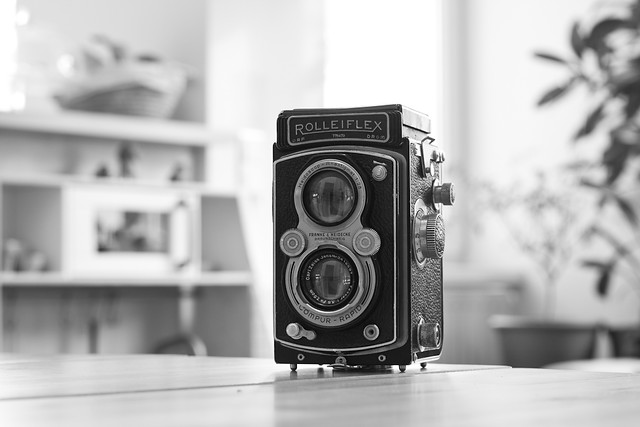
My Rolleiflex Old Standard 621 was in need of some attention after having been a little neglected the last years. I carefully cleaned both lenses, which had gotten a little foggy, and dismantled the whole waist-level finder to clean the viewing system as well. I hoped to find the exact fabrication date of my camera hand-scratched behind the mirror, but unfortunately I found nothing. I managed to secure the flaps of the waist-level finder hood, which had always been a little shaky and never closed perfectly. Now the hood closes with a reassuring snap every single time. I managed to fix another of my Rolleiflexes, the Automat 631, as I already explained a couple of weeks ago. I am happy to report that the film transport mechanism operated flawlessly through the first film that I shot after the repair.
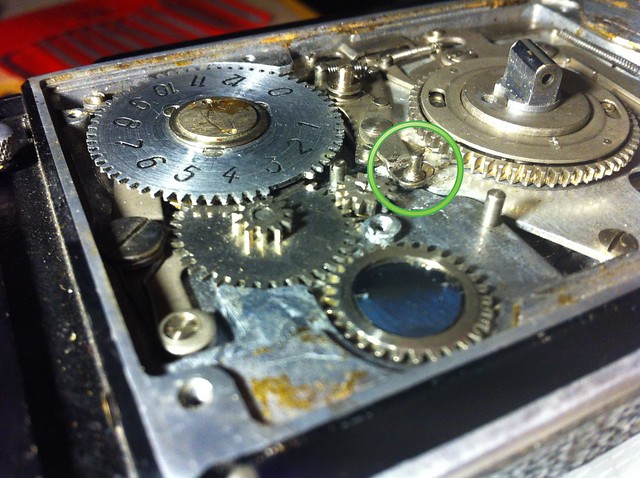
Rolleiflex Automat 631 - Dowel in place

My still dormant Zeiss Ikon Contax S got a new set of shutter curtains but, alas, that did not solve the erratic locking of the wind mechanism that happens from time to time. Still a work in progress. As well as the aforementioned Zeiss Ikon Contaflex I, whose diaphragm stops down a little too slowly resulting in overexposed pictures. It needs a bit of lubrication in the aperture ring, or maybe a little more tension, or probably both.

As you see, I have still lots to do in the servicing & repair chapter. I hope I will find the time, inspiration and strength to keep going on.

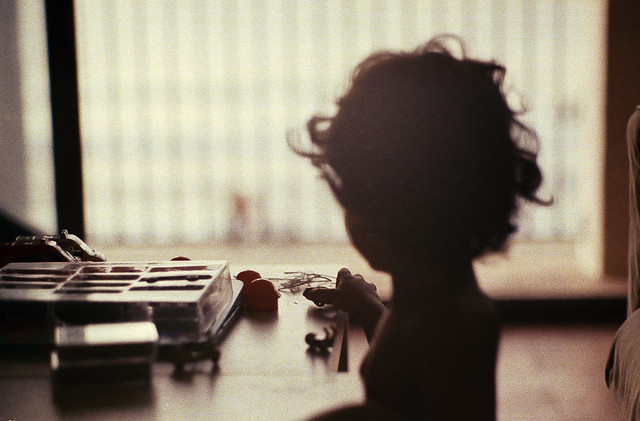
One of my photographic realizations last year was how nice it felt to be able to create memories, what a warm feeling it is to look at pictures of my family, of my friends. The strongest motivation that I have to grab a camera is, still, to take a picture of my loved ones.

This year started with our family growing, we welcomed our second son in January.
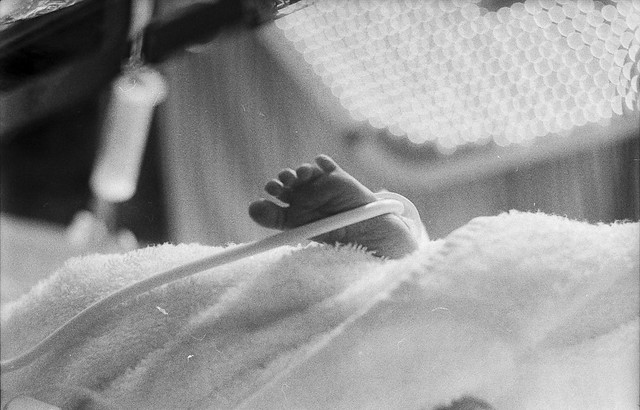
nicu
(Contax F, Kodak Tri-X 400, EI 1600/33°)

After a very challenging first month, in which photography was one of the few things that helped me keep my sanity, that brought me peace and solace, the inspiration slowly returned, and I managed to find happiness and enjoyment in creating such memories again.

kissed by the sun
(Exakta Varex IIa, Fujichrome Velvia 50, expired, ISO 50/18°)
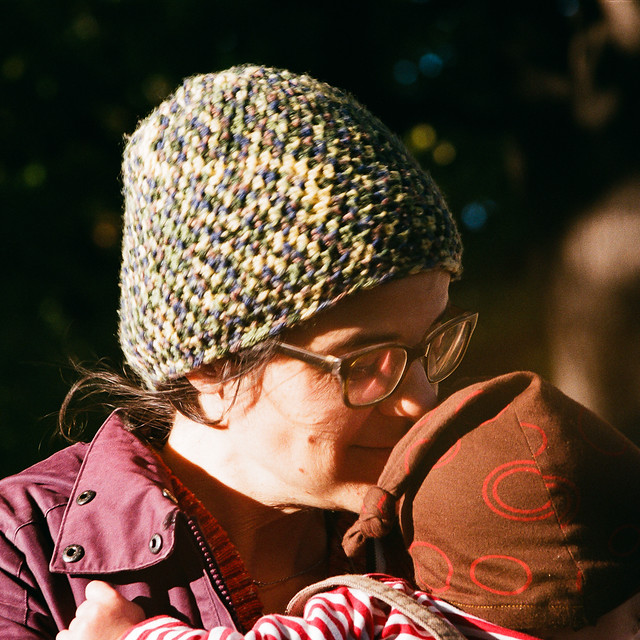
double portrait at sunset
(Contax II, Porst Color-X 200, expired, ISO 200/24°)
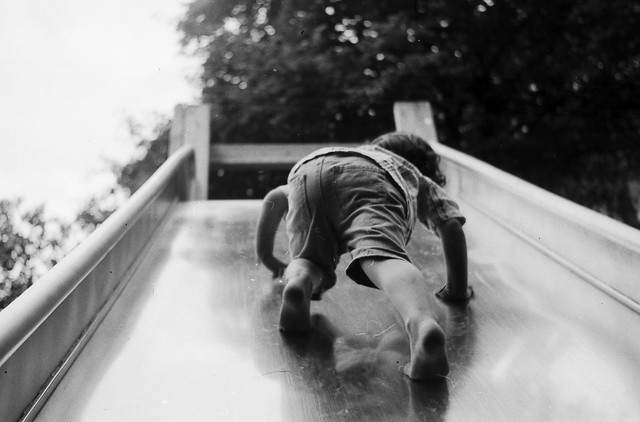
climber
(Contessa 533/24, Ilford Delta 100, expired, ISO 100/21°)

And this, for me, is a very important endeavor. I have become very aware of the invisible but yet very real border that a child's memory cannot cross. My older son is able to recall easily, and with a surprising richness of detail, events that happened a year and a half ago. Yet, he cannot remember anything that happened before he turned 2 (he is 4 years old now). Neither single events, nor "bigger" things like how our flat looked back then. In the light of this, I have come to understand my pictures of them as a kind of poor, but still necessary, additional memories for my children, from a time in their lives that they are probably going to forever forget. I am happy to do this for them. I consider myself very fortunate.

As I did with my older son, ever since I knew my second son was going to be born in 2016, I started my search for a camera, an old one, made in 1916, a camera exactly 100 years older than him. Romantic as I still am, I want it to be able to take pictures. I thought that 1916 was not going to be as difficult as 1912, but to this day I have only one single candidate that could have been built 100 years ago: an Ansco Vest Pocket No. 1, which I got in my previous 1912 quest. The camera, though, is still not usable, because the bellows is badly worn and not light-tight. I was able to recover operation in the 100 year old Actus shutter, but unfortunately, I managed to destroy the diaphragm in the process (an aperture blade broke). I still could operate the camera always at full aperture, but there is still the leaky bellows problem.

I guess, thus, that the quest for a camera made in 1916 is still open. Hope dies last, and I am already longing to get a 1916 Voigtländer Alpin. In any case, I will be honored if you keep sharing this exciting journey with me.

Tuesday, October 25, 2016

Adventures on Rolleiflex repair

On March 2015 I got a Rolleiflex, an early Automat (2nd Model, K4B build 631), built around 1938.

Compared to its predecessor (the Rolleiflex Old Standard), the Automat introduced a number of crucial improvements that enabled photographers a much faster workflow. After loading film and closing the camera, one just needs to slowly wind the film and the camera stops automatically at the first frame (no need to check first frame alignment with a red window as in the Old Standard, and pretty much every other camera at the time). Shared with the Old Standard is the film transport through a crank lever with an automatic stop for the next frame; new was that this same crank lever turn tensions the shutter as well. Double and blank exposure prevention were too introduced.

rolleiflex automat 631

When I tested my Rolleiflex with film I noticed many problems. Although the film counter started running correctly after 5 or 6 turns of the crank, the film advance did not stop at the first frame. If the lever was in the "ready" position (at an angle around 1 o'clock), the shutter could be released and a picture could be taken. The usual crank movement for Rolleiflex film transport (turn the crank clockwise until it stops to advance to the next frame, turn it counter clockwise again to return it to the "ready" position) did not stop at all: you could turn the crank freely until after the whole film was wound on the take up spool! The counter clockwise turn did not stop at the one o'clock position either.

There were some issues with focusing as well. The front standard traveled smoothly across the close focusing range, but there was a definitely noticeable resistance to reach the infinity position, where the standard is closest to the camera body. The taking lens, in fact, was not able to focus at infinity at all.

Oh, and yes, the slow speeds of the Compur Rapid shutter were dead, too, but this is something that I already knew from many of the prewar cameras that I have.

Soon I got the nerve to open the camera to take a look at what was going on inside.

FIRST EXAMINATION: FILM ADVANCE (March 2015)

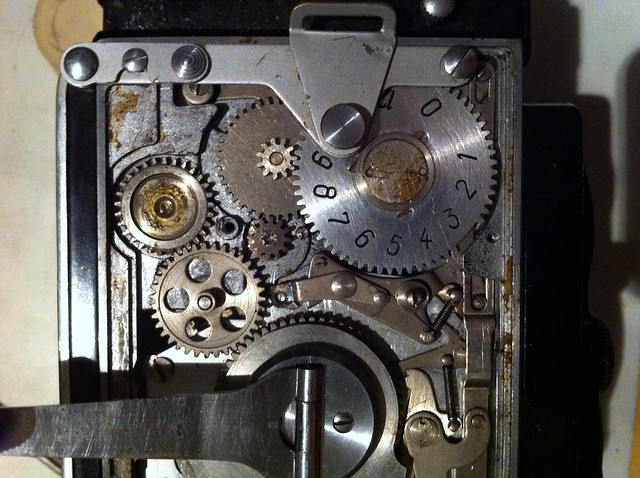
Symptom: free turning of the film advance crank lever. It should lock on the ready-to-shoot position. After taking a picture, a clockwise turn should stop after advancing exactly one frame, and then a counter clockwise turn should stop again at the ready-to-shoot position.

Rolleiflex Automat 631 - film transport

Diagnostic: missing dowel actuating as cam follower. There is a large cam that turns with the crank lever. A lever with a hole on its tip was bent down and made friction against the base plate, which prevented its free movement. If this lever was held in a definite position, the film advance blocking mechanism was activated and the clockwise turn of the crank lever was correctly blocked after advancing exactly one frame. I assumed that the hole was supposed to contain something, a little rod, a dowel, that held the lever exactly on this position as the crank lever started its film advance. The counter clockwise turn of the crank lever should be blocked by this same missing dowel making contact with an obvious metal stop on the cam.

Very probably, someone forced the crank lever backwards too violently past this stop, separating the dowel from the lever and bending the lever down. I was able to reproduce the proper film advance stops by holding a screwdriver in place of the missing cam follower.

As a temporary solution to be able to use the camera, I blocked the free movement of the lever with a toothpick tip to allow free turning with no stops. I could "simulate" the film advance manually by aligning the next frame number in the film counter, as if it was a red window.

At this point, I tried to imagine ways to build myself a replacement for the missing cam follower.

FIRST REFLECTION BREAK

How did it happen? My flickr friend Hans Kerensky pointed me to a couple of pictures from Gustavo Vasquez, who seemed to have faced a similar problem. In his case, the dowel got caught in the gears of the film transport, blocked everything and did a lot of damage. By forcing a locked crank lever backwards, one could break or at least dislodge the dowel. This seems to be a design weakness in early Automats that was addressed in later versions.

If in Gustavo's Automat the dowel was found inside the camera, I started wondering if the dowel in mine could have stayed inside as well. One day, then, it struck down on me. Was it possible that both issues (film advance and focus at infinity) were linked? Was it possible that it was precisely the missing dowel what was preventing the front standard to reach infinity focus position?

SECOND EXAMINATION: FRONT STANDARD (May 2015)

A boring train ride back to Vienna, the Automat and a screwdriver.

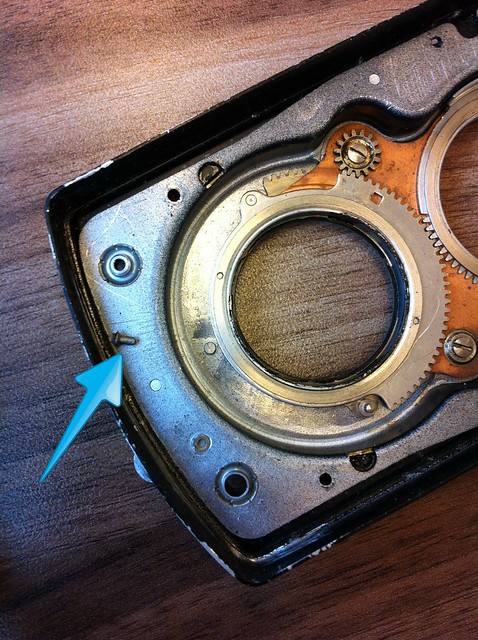
I removed the front fascia by carefully removing the leatherette on the front to reveal four screws. As I was expecting, the front standard, without the fascia, reached infinity focus precisely and smoothly. The problem, thus, had to be somewhere in the front fascia!

On closer inspection I found something, what seemed to be a tiny metal piece, caught in the lower crate, obstructing the last half millimeter of travel needed to reach infinity focus. I got my tweezers, my hands almost trembling with excitement, and took it out of the place where it had rested for at least the last 40 years. It was the missing dowel, yes.

Rolleiflex Automat 631 - missing dowel

SECOND REFLECTION BREAK

Well, now I was quite happy because I got everything that I needed to fix the camera. But how to reattach the dowel?

The thing is really tiny (less than 1 mm in diameter, around 3 mm long) and the violence of the blow had left its traces in both the dowel and the hole where it was supposed to be attached. After some failed attempts at just pressing the dowel into the hole, I gave up. It wouldn't go.

I packed everything carefully and reattached the toothpick tip to block the lever, so that the camera could be used without automatic stops. Using the frame counter as a "red window" I could manually advance the film to the next frame. It was of course not as comfortable as the true Automat function, but at least I could use the camera.

In fact, I shot 13 rolls of film with the Automat in this way. And, as it was with the Old Standard, the pictures that this camera was able to produce surpassed my expectations by large every time. If I have learned something about Rollei TLRs is that they never ever disappoint.

THIRD EXAMINATION: GO FOR IT! (October 2016)

For one reason or another, I was scared of this repair. In fact, it took me almost one year and a half to gather the courage to open up again the right side of the Automat.

Last week, finally, I got the courage to delve into its guts and, once again, marveled at its ingenious yet simple mechanics. I guessed that the violence of the shearing had deformed the hole a little bit, elongating it to an ellipse. I got a very tiny file and tried to file a little into the hole to make it broad enough to replace the dowel. I filed the edges of the dowel, too, so that it could more easily be reattached into to its hole.

A little filing, then one attempt. It wouldn't go. More filing, second attempt. It still wouldn't go. I realized that I would need to apply the pressure to reattach the dowel with a tool. I got pointed pliers and tried to get the dowel just enough into the hole so that it would not fall. Then I applied uniform pressure to the tip of the dowel and to the lever with the pliers and I realized that the dowel was in fact very slowly going into the hole. At the end I applied a few tiny drops of instant glue to not let it fall again.

Rolleiflex Automat 631 - Dowel in place

The dowel was again where it was supposed to be. I loaded my "Automat test film" into the camera. This is just the protective paper of a 120 film with a short length of film carefully taped into it where the film start is supposed to be, so that the automatic film start feeler could be "cheated". I closed the camera and slowly turned the crank lever clockwise. The dowel ran smoothly below the cam, through a "passage" at the right place to hold the crank lever free. Then a little resistance needed to be overcome and I heard the distinctive click as the frame counter was engaged. Sure enough, the frame counter wheel started turning slowly, and the lever with the dowel changed its angle minutely. As the frame number 1 reached its proper position on the film gate, the powerful film advance lock mechanism stopped the crank lever clockwise turn. The crank lever could now be turned counter clockwise. The dowel ran above the cam until it blocked its movement as it made contact with the metal stop on the cam (if done very brutally, this could dislodge the dowel again!). After releasing the shutter for the first frame, the film could be advanced again until frame 2 and then the crank lever turned counter clockwise to the ready position at one o'clock. This way, I was able to reproduce the proper Automat film advance.

My Automat, as it seems, is now ready to be used as it was meant. I am eager to shoot a roll of film with it.

PS: The previous owner of my Rolleiflex, who was as well the one that bought it new in 1938 or early 1939, was a merchant from Gmunden in Upper Austria. He was born in 1904 and died in 1981. As his grandson told me, he was a passionate mountain climber, especially on the Dolomites, and he used this same camera to take many pictures of his endeavors.

Rolleiflex Automat 631
My Rolleiflex Automat 631 flickr set

Maker Franke & Heidecke
Model Rolleiflex Automat K4B build 631
Type twin-lens reflex camera
Viewing Lens Heidoscop Anastigmat 75mm f/2.8
Taking Lens Carl Zeiss Jena Tessar 75mm f/3.5 (No. 2416597, 1938)
Shutter Compur Rapid, 1 - 1/500 + B + T
Film type 120 6x6
Year January 1938 - March 1939
Country Germany

Friday, December 11, 2015

Happy 5th analogversary!

Five years ago, on December 11th 2010, I posted my first film picture on flickr. These have been definitely the most exciting years of my (short) photographic adventures.

For me, it all boils down to a fascination with simplicity, to the quest for a minimalistic picture taking setup. Film has been liberating in many aspects. No more coming back from a short excursion with 200+ digital pictures to find out that I have neither the time nor the willingness to process and sort them out. No more forgetting about spare batteries or memory cards. No more search for total picture perfection. I think we humans tend to overdo a bit: we wanted music perfection and along came high fidelity and digital audio to deliver just that. Then we realized that perfection was almost akin to lack of "soul", that what we actually loved was the background scratching noise of the good old vinyls. We asked for picture perfection and along came a herd of engineering and electronic wonders able to deliver just that. Still, we realized perfect pictures did not deliver the emotional response we were used to. On the other hand, film did just that for years, and still does. And here I am.

There have been many new old cameras this year. Each and every one with a certain meaning or purpose. But, in many cases, the collector has won over the photographer. There are certain sequences, certain regularities, certain historically significant milestones, that I now recognize as quite valid reasons to purchase a camera, although from a user point of view it has little or no added value. This year, as I will explain in a minute, the collector in me has been driven almost exclusively by a single word: Contax.

I am very happy after this fifth film year. When I look back at the pictures I took this year, I realize that I definitely grew up. There is a gut feeling about exposure, there is a familiarity with certain films, with certain lenses, with certain cameras, that is new and very reassuring. Of course I make mistakes every now and then, but this year there are a number of pictures that I am quite proud of. Last year I felt the photographer was the weak link in the chain. It still is, but I am happy to realize that I am working on it.

toy car time
(Contax II, Solution Super VX 200, expired, ISO 200/24°)

The year started with an ongoing fascination for Contax rangefinders. Through active scouting and a couple of good luck strikes, I am now the proud owner of an almost complete lineup of Zeiss Ikon Contax 35mm rangefinders: both prewar Contax II (1938) and Contax III (1938) and postwar Contax IIa (1952) and Contax IIIa (1950-1951). The only one missing would be a Contax I, the first one introduced in 1932. They command prohibitive prices and have a reputation for being mechanically fragile. The collector in me is on the look. The user keeps telling him there is no hurry. These four cameras have been the ones I most used this year: 25 films in total, 10 alone with the Contax II. As a nice counterpoint to the Contax family, in late summer came along their arch-rival, the measure of all things, a wonderful Leica IIIa (1936).

zeiss ikon contax ii

This rangefinder love story has not been just on 35mm film, though. I already owned Super Ikontas for 6x6 and 6x4.5 format on medium format 120 film. A relatively battered but functionally sound Voigtländer Bessa RF (1939) arrived to cover the wonderfully large 6x9 format with the reassurance of a rangefinder to set the focus distance right. With the unforgiving shallow depth of field of the 105mm lenses normal for this format, this is truly a great help. Again the Super Ikonta BX (6 rolls) and this Bessa RF (5 rolls) have been among the medium format cameras that I used the most this year.

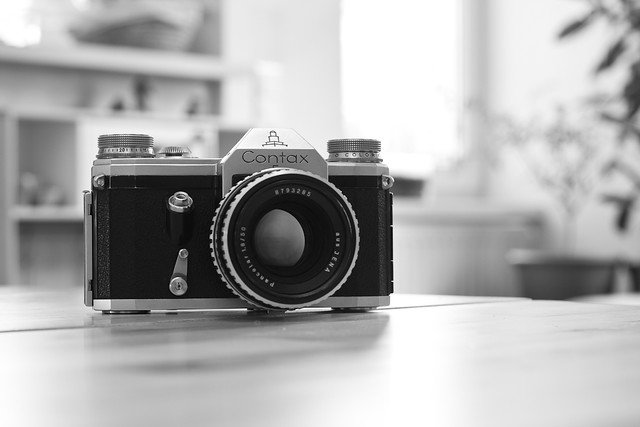
Another interesting turn this year has been the (re)discovery of 35mm SLR cameras. Again, it all started with a Contax, but now the East German one, the first camera with a fixed pentaprism, the one that laid out the design that every single SLR camera followed for the next 60+ years (yes, dSLRs are still built after the Contax SLR today). First a Contax F (1956-1959), then a very early and still non working Contax S (1950). In order to learn the skills and tricks needed to return the Contax S to working order, I acquired a number of nonfunctional Contax F/Pentacon F "test objects" for little money, with the idea of repairing them, learn a lot and then sell them away. Two of the Fs, though, are so accurate and fine after getting a new set of shutter curtains that I have trouble parting with them... One of them, probably the Pentacon F, is definitely going to stay, because this way I can use the lens that came with the Contax S, a magnificent Carl Zeiss Jena Biotar 58mm 1:2.0 that seems to transform every single picture into a work of art. An Ihagee Kine-Exakta II (1949-1950) was, again, a nice counterpoint to the Contax family, to enjoy the reversed image on its waist level finder.

contax f

Talking about lineups and families, I could not resist an early F&H Rolleiflex Automat 6x6 (1938-1939) that came with a bunch of accessories and has been too (with 6 rolls) among the most used medium format cameras this year. The Rolleiflexes I own now are a Rolleiflex Original 611 (1929), a Rolleiflex Old Standard 621 (1935) and this Rolleiflex Automat 631 (1938-1939). See the sequence there? As I said, I could not resist... :) There is a very interesting story about the repair process of this camera, but as it is still not fully completed, I hope I will find time later on for it. It involves a missing piece that was, in fact, not missing but dormant inside the camera for decades...

rolleiflex automat 631

And finally, as the year was almost over, a revival of the venerable 9x12 sheet film format came with a Voigtländer Avus 9x12 horizontal (1925). As the online seller did not manage to open up the camera front, I got it without knowing what lens was on it or, for that matter, if it even had a lens! The price was really attractive though, so I got it anyway. As the camera arrived, I did manage to open the front and discovered a lens (Voigtländer Dynar 135mm 1:5.5) about which I did not know much. To my surprise, as I researched a bit, I discovered that the Dynar is no other than a second generation Heliar (one of my strongest longstanding favorite lenses of all time, as you can read here, here and here) that got another name to not mess with the sales and reputation of the first generation Heliar. Pictures taken with it reveal its true pedigree. Again, the story about transferring this lens to a more convenient 9x12 camera body (no other than a Voigtländer Bergheil 9x12) remains to be told soon. As it involves a certain amount of McGyver-esque use of cardboard adapter rings and had a happy ending, I hope it will be an amusing one.

When it comes to the films I used, this year has been a very balanced one (22 black&white, 24 color negative, 21 color slide). The ones I shot the most: Ilford HP5 Plus 400 for black&white, Kodak Portra 160NC for color negative and Agfaphoto CT Precisa 100 for color slide, with 5 rolls each. This year I experienced a reconciliation with long expired film. In fact, I shot much more expired than non-expired film this year. I did it, though, in a much more mindful way. I tried to adapt my shooting to the shortcomings and special needs that I learnt the hard way in the past. It is beginning to work out, I think.

red cast
(Rolleiflex Automat 631, Fujicolor HR 100, expired 1986, ISO 100/21°)

Although this year I kept developing my black&white films at home (18 rolls in total), lately I found myself being lazy and bringing b&w film to the lab for development, too. I got myself a color negative development kit, but I did not manage to find the time and the motivation to try it. I guess the need to do my development in the evening or even late at night, when our son is already sleeping, does not help, as it neither does having to store everything in the broom closet afterwards. Alas, I guess there might come a time where I am more inspired to develop.

What I kept doing, though, is fixing and servicing my cameras. This year I am particularly proud of the successful rangefinder adjustment of my Bessa RF, on which I went almost exclusively by feeling, after realizing that the only hints I found online were in fact meant to solve another issue. Another fun repair was the sticky film advance/cocking lever on a Zeiss Ikon Taxona, for which I needed an almost complete strip down to remove the hardened grease that was preventing a smooth operation. I have become relatively proficient at replacing stiff shutter curtains on East German Contaxes, although the whole point of this learning, bringing back the Zeiss Ikon Contax S to life, has not been reached yet. And not to forget the repairs that I mentioned before: first, recovering infinity focus on my Rolleiflex Automat 631 and recovering its automatic stop on film advance (still a work in progress), and second, transferring Compur shutter and Dynar lens from an early Voigtländer Avus 9x12 horizontal to a later Voigtländer Bergheil 9x12 body with Bergheil bayonet. What I still did not have the guts to tackle, though, was the one repair that I told about one year ago: replacing the broken shutter ribbons and the slow speeds on a Zeiss Ikon Contax II. I must admit I cheated a little bit on this one, since the Contax II that has become my favorite this year is in fact another (working) one which I came across. Still, the prewar Contax II is high in my to-do list.

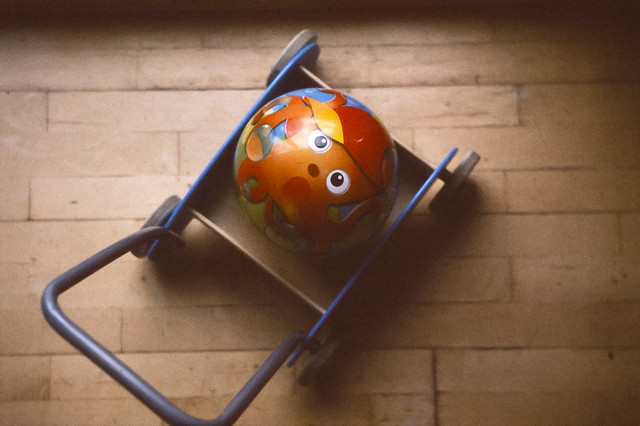
cart and ball (49/52)
(Contax IIa, Fujichrome Provia 400, expired 2000, ISO 400/27°)

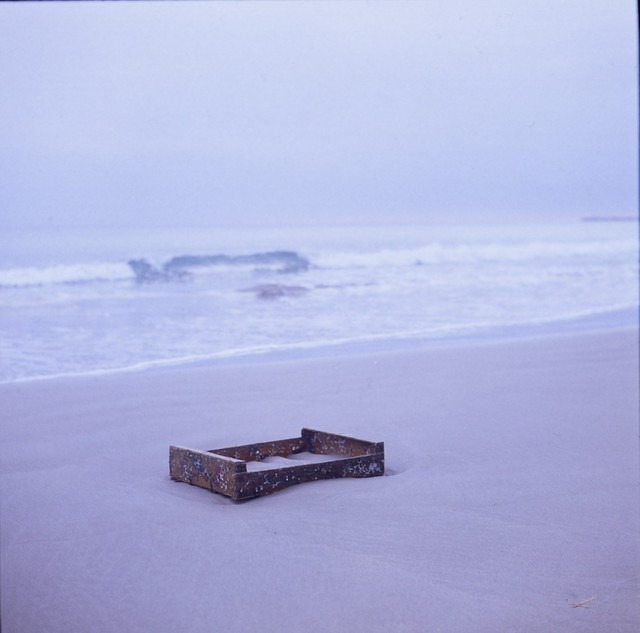
flotsam
(Super Ikonta BX, Fujichrome Provia 400X, ISO 400/27°)

As I said, I am quite happy with the pictures I took this year. About the shooting, there seems to be a deeper understanding of the naked camera and its four controls (aperture, shutter speed, focus and framing). Sometimes I realize I did not consciously think about any of them, yet the picture was taken. A long time ago, a photographer acquaintance of mine told me that "you have to know your light". Maybe this is what he meant. Like when you are riding your bicycle and you do not think about how you are steering, yet you drive safely through the corner. Of course there are differences between the cameras (focus is not the same with a rangefinder than with a plate camera!), yet I found I did not have to struggle much after taking a different one.

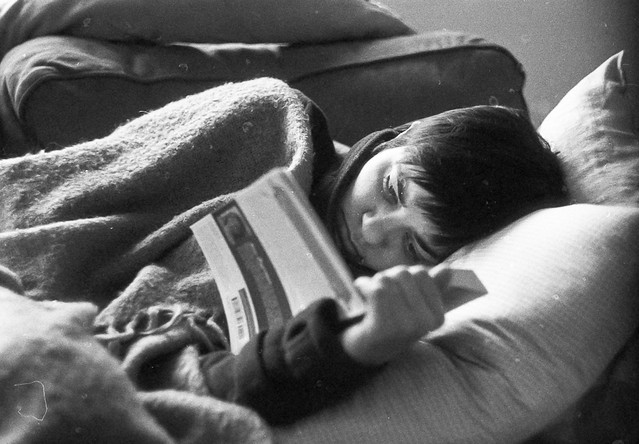
reader
(Contax F, Ilford HP5 Plus 400, expired, ISO 400/27°)

into the light
(Baby Ikonta 521/18, Kodak Ektar 100, ISO 100/21°)

For my next year I wish I manage to keep taking as many pictures as I did this last one. Because I realized how nice it is being able to create memories, the ones that reach to your soul, and what a warm feeling it is to look at pictures of my family, of my friends. I realized, too, that my strongest motivation to grab a camera is, simply, to take pictures of my loved ones. I wish, too, not to loose the direction my photography seems to be taking. I guess I am defining my photographic style, and it feels right to me.

tessar summer sunset
(Rolleiflex Automat 631, Kodak Portra 160NC, expired, ISO 160/23°)

warmth
(Contax IIa, Ilford HP5 Plus 400, expired, EI 1600/32°)

And, of course, I wish I manage to find more time to write about this journey more often than this last year. I will be honored if you keep sharing it with me! :)

Monday, March 23, 2015

Two cameras for a lens - Voigtländer Inos I

Last November I got a Voigtländer Inos I at a fairly low price. I decided to get it mainly because of the lens, an early Voigtländer Heliar f/4.5. I already have such a lens on my Voigtländer Rollfilm 5x8 and I am deeply in love with the very unique pictures that it produces. Unfortunately, the relatively exotic 127 film format that the Rollfilm 5x8 requires is not very convenient: film choice is very limited and the prices are on the high side. For this reason, I thought a 6x9 folder using 120 film (readily available in a decent variety of films at reasonable prices) with a Heliar lens was a good idea.

I was not able to check the camera in person before I got it. I could just look at a single low-quality picture, enough to see that the lens was in fact a Heliar but not much more. As the camera arrived and I opened up the package, the camera turned up to be in quite poor condition: leather was missing from the front and sides, rust had found its way onto many spots, sports and wire frame finder were not there and it felt like it had not been taken care of in the last sixty years. The lens, though, looked pretty clear, which was the whole point of it. I improvised a crude "leather" covering and got the thing running again.

crude camera covering job... #diy #electricaltape #vintagecameras #voigtländer

A photo posted by tonicito (@tonicito75) on


The shutter though, showed quite a strange behaviour: slow speeds were a little too slow, which is common because of hardening lubricants in the mechanism, but time and bulb settings, in which the shutter can be opened and closed manually through the release lever, would not respond at all and 1/250, the shortest speed, sounded and looked to me more like 1/50 or 1/100. This called for a closer inspection, so I carefully opened the shutter and discovered that a number of important pieces were missing: the B-lever, which connects the shutter release to the blade operating ring for T and B operation, was nowhere to be found. This could still be OK, since these are speeds that are rarely used except for long exposures. Unfortunately the booster spring was missing, too. This is one strong coiled spring that gives the shutter the extra tension needed to achieve its highest speed, a tension which is very noticeable when cocking the shutter at 1/250. Without the highest speed, I needed to stop down the iris to compensate, and "large" apertures (we are still talking f/4.5, so were the figures in the 20s-30s) is a favourite spot for me using a Heliar.

I accepted the facts, shot a roll of film with the camera and shutter as they were, fell in love deeply (again!) with the Heliar lens, and let it sleep. In the background I searched for a similar 6x9 folder with a compatible Compur shutter to obtain the missing parts, or to exchange mine, but found nothing. Last month, though, I did find such a 6x9 camera. And, ironically, it was yet another Voigtländer Inos I, in much better condition, and again with a fairly low price tag. This one sported an Anastigmat-Skopar f/4.5 lens which, for all that matters, is an excellent performer. It is no Heliar, though.

... but that #Heliar lens is oh so wonderful! #diy #vintagecameras #voigtländer

A photo posted by tonicito (@tonicito75) on


The shutter on the second Inos has all its parts in place. The camera has even the body piece of the sports finder which, incidentally, proved that it was indeed the relatively rare Inos I for dual format (6x9 and 4.5x6) and not the much more common Rollfilm 6x9. The shutter required a little service because the slow speeds would run much much too slow. The booster spring needed attention, too, because sometimes it fell out of position when tensioning and let 1/250 run like 1/50 or so. A little pressure, lovingly applied with pliers, brought it back to a shape with which such out of position accidents seldom happened. I need to tension 1/250 with buttery fingers, though; I hope I'd manage to notice when the booster spring falls out of position when tensioning the shutter!

Both lenses having the same focal length (105 mm), the easiest way was to replace the lenses and use this nicer camera with its working shutter. I removed the Skopar lens from the "new" Inos and replaced it with the Heliar. The threads might not have been "exactly" compatible, since the front element needed a fair amount of torque to screw, but I checked infinity focus and it looked tack sharp. The first roll of film is in the making, I hope it turns out OK.

It is interesting that both my Inos I cameras are not at all very far away in time from one another. The Inos I (back then it was just called Inos) had a relatively short production run, from 1930 to 1933 (some sources say 1932), and it was quickly superseded by the Inos II. I would say both cameras were built in the same batch: their body serial numbers are just 48000 numbers apart (I guess these body serial numbers applied not only to this model but to all Voigtländer models, but I am not sure). The battered one has a higher body serial number (947270) than the nicer one (899432). Interestingly, though, both lens and shutter were a little newer (higher serial number)in the battered one. The lenses are only 747 numbers apart (760623 for the Skopar, 759876 for the Heliar). Both point to September 1933 as fabrication date. The shutter serial numbers point to 1933, too, and again the nicer Inos has a slightly newer one.

voigtländer inos i

I am happy with this camera: It is hardly possible to get a larger film format (6x9 on 120 film, that is more than six times as much area as provided by a standard 35mm camera) in a package that fits into any coat pocket so nicely as this one. The folded camera is not heavier or bulkier than the average cell phone that we used to carry around by the end of the 90s. Also, being a true Voigtländer, the quality and precision of every single component is exquisite, and its more than 70 years of various adventures are hardly noticeable when the folding bed closes nicely with a reassuring snap or the film advance key rotates as smoothly as it did in the mid thirties. And the Heliar, ah, that magical Heliar now in a much more usable package, is the whole reason why I took care of these two cameras, these almost twins that, after a long journey, reunited again.

Voigtländer Inos I
My Voigtländer Inos I flickr set

Maker Voigtländer
Model Inos I
Type folding bed camera
Lens Voigtländer Heliar 105mm f/4.5 (No. 759876, Sep 1933)
Shutter Compur, rim set, size #0, 1 - 1/250 + B + T
Film type 120 6x9, 4.5x6
Year 1933
Country Germany

Monday, December 15, 2014

Happy 4th Analogversary! (2/3)

(...continuing from here)

One of my wishes for this fourth year was something in the lines of "collect less, shoot more". Well, the "collect less" part did not really come out very well, but I am happy to see that I did manage to shoot much more film than in the previous year. I shot 81 rolls/sheets of film in this year, which is almost as much as I shot in my first analogic year. Comparison with last year (32 rolls total) makes me quite happy. The cameras that I used the most have been the Kiev 4 in 35mm film (12 rolls) and a tie of the Bessa 6x9 and the Super Ikonta BX in 120 film (6 rolls each). This year I shot 5 rolls of 127 film, which is an all-time high. The Vest Pocket Kodak, one of the 127 cameras that I used, will be the main topic on my third and last analogversary post...

About the films that I used the most there are two old friends and a new kid on the block: in black and white I shot 4 rolls of Kodak Tri-X 400, most of them pushed even to EI 3200 (3 stops) which came out fine and contrasty, and in color slide again the winner was Fujichrome Velvia 50 with 6 rolls and 2 film sheets. In color negative I shot 7 rolls of an expired Porst Color-X 200, which I suspect is rebadged Kodak material, with a color rendition, especially in sunlight, that has grown on me along the year.

in the spotlight (20/52)
(Vitomatic IIa, Color-Skopar 50mm 1:2.8, Porst-Color-X 200, ISO 200/24°)

This year I shot a lot of sheet film using plate cameras: 6 sheets in 6.5x9 format (using both my Ideal 250/3 and my Bergheil 6.5x9) and 7 sheets in 9x12 format (with my Recomar 33). Again, there is great satisfaction in holding a huge 9x12 color slide sheet against the light and marvel at the level of detail that it can capture.

Another challenge that became a routine this year has been black and white film development. I developed 17 rolls/sheets of diverse brands of black and white film, all using the same film developer (Rodinal, in fact the oldest photographic product, still being produced after almost 125 years!) and mostly using stand development. There have been mixed results, the great part quite satisfying and some not so much. But I guess the not-that-happy ones were more about using very long expired film in poor lighting conditions than the development.

long toddler exposure
(Kiev 4, Jupiter-8M 50mm 1:2.0, Efke 25, ISO 25/15°, stand development 1.5 h in 1+100 rodinal)

I love the almost meditative mood one reaches on certain film development stages, especially in the final wash using the Ilford method: filling up the tank with water and performing slow inversions for 1, 2, 5, 10, 20 and 50 times each round, spilling the water and filling up the tank again each time between rounds. After that, the magical moment of opening the tank, and slowly unrolling the wet film from the reel to reveal the pictures that were latent until the chemicalthes did their job, is every time a personal highlight.

Another highlight this year has been in camera repairs. I started with my Rolleiflex Original 611, whose shutter needed attention. I managed to recover the sticky slow speeds and make the old rim set Compur shutter purr again happily even at 1 second. I, too, cleaned the optical path (inner side of the viewing lens, mirror and ground glass) as well as I could, which made the camera again quite usable. At last, I managed to clean and polish its leather, realizing that the brown spots that I thought were permanent did, in fact come out and left a shiny, beautiful camera that shouts quality from all its four corners. The Voigtländer Brillant V6 was a camera that I almost recovered to working condition from the trash can. I got it as a cheap addition to a lot (together with a Rolleicord V). Being a Voigtländer, even with a bakelite body, it is a well built and extremely well thought camera that responded very well to a little care. I fixed the film transport with film counter and automatic stop, and cleaned the waist-level finder and mirror to a crystal clear state I still can not believe. The Skopar 75mm 1:4.5 lens and the Compur shutter needed cleaning and service, too. All in all, I got lots of camera repair fun and a portable, usable camera that delivers a quality that is difficult to beat, all for what you would pay for a lunch in a standard restaurant.

The Ihagee Parvola 1350 needed, as usual, a little service in its Compur shutter. In this shutter I braved removing the slow speed escapament for the first time for properly cleaning it. It was my first time because on reinstallation one needs to adjust the shutter speeds again, because the position of this escapement determines the duration of the slow speeds. It was not easy, but at the end all speeds sound and look good enough for me. The Schneider Xenar 70mm 1:4.5 needed a little cleaning, too, and I lubricated the focusing helicals to make them run smoothly. Another first for me was adjusting a rangefinder: my Kodak Retina II needed a little lubrication and cleaning in the rangefinder, and after that the infinity setting needed to be adjusted again. I am still not quite sure if I got it right, I still have to check with critically focused shots, but it looks now clean enough to be used.

happy 4th analogversary!

My biggest repair this year, though, is still a work in progress. The Zeiss Ikon Contax II, one of the best cameras ever made and one that I am really happy to own. As I got it, neither the self timer nor the shutter did work. The Contax has a metal curtain focal plane shutter, a quite different beast from the leaf shutters that I am now quite familiar with. I opened it carefully and disassembled to shutter block from the camera body. A little cleaning, a little help and I managed to make it run a couple of times, with a purring and whizzing sound from its multiple escapements that made me think for a moment that I was about to succeed. But then the bane of this camera model set off. The Achilles' heel of every prewar Contax, and in fact the only thing that ever fails with a Contax, are the silk shutter ribbons that link together the opening and closing curtains. The shutter design is such that the ribbons slide through tiny eyelets on the opening curtain that have enough friction to hold it up as the shutter is cocked but allow sliding through when the shutter is fired and both opening and closing curtains are reeled onto the lower drums. These ribbons needed to be replaced every ten or twenty years, cameras were guaranteed for around forty thousands shutter operations. A camera that was built in 1936-1937, like mine, and that probably has been sleeping for decades, has had plenty of time for these ribbons to become dry and fray. Two or three shutter operations in my hands after such a long time was definitely too much for the old silk ribbons, that broke and left me with a much more serious repair job to do. Because, of course, these ribbons can be replaced. I already got the replacement silk ribbons from Japan (it seems to be one of the few ribbon type and material that properly work on a prewar Contax) but I still did not find the courage to delve again into the job. The Contax II shutter remains my biggest camera repair challenge for the next year. And if I manage to fix the non-working self timer along the way, I will be twice as happy.

The last successful camera repair job this fourth year has been a Vest Pocket Kodak from 1912, my oldest and most significant camera so far. The whole story of the Vest Pocket Kodak, on my last analgoversary post, coming soon...

(to be continued...)


Friday, December 12, 2014

Happy 4th Analogversary! (1/3)

Four years ago, on December 11th 2010, I posted my first film picture on flickr. This fourth year has seen the greatest increase in my vintage camera collection so far, to a point where I am beginning to think for a while when I am asked if I am a collector. In my heart I am not a collector, but an enthusiastic admirer and user of vintage cameras, that happens to enjoy satisfying the curiosity about this one or the other camera by getting them, making them work and taking photographs with them. But I know that the sheer facts tell another story, quite ironic if we consider what I said about the user/collector issue one year ago (collect less, take more pictures). Perhaps every collector started this way. Perhaps I am becoming a collector that enjoys using all his cameras, or at least tries to.

My commitment to the magic of film has not dwindled a bit. On the contrary, it is probably stronger than ever, especially now that I develop all my black and white films myself and I can witness the magic every time I open my daylight developing tank and pictures are revealed as I slowly unroll the film from the reel. In fact, I can hardly remember a single time that I photographed with a digital camera this last year. And not because I am one of those film nuts that see digital as evil: I do think that both are different tools and that each has its place, its strengths and weaknesses. I just happen to not have found neither chance nor the appropriate conditions to photograph with a digital camera.

In this fourth year I added many new old cameras to my stall. Most of them have a special meaning, they have certain historic or sentimental significance for me. In fact I am quite picky with my camera choice, there just happen to be too many interesting cameras out there to be discovered! :)

: : : (the honest collector's dilemma)

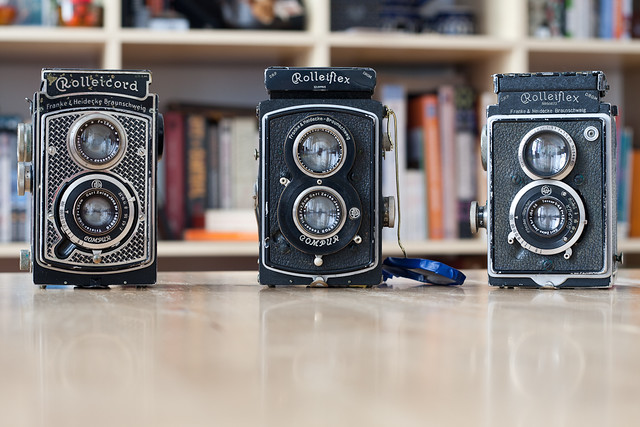
I got three TLRs made by Franke&Heidecke before WWII: the Rolleiflex Original 611 (1929), which is the grandmother and the cast of every single TLR that was to be produced in the following 60 years; the Rolleicord I Art Deco (1934), with its unusual and beautiful nickel cover, that brings one back to Midtown Manhattan in the late twenties; and the Rolleicord V (1954-1957), which combines convenience of use and remarkable contrast and sharpness from its Schneider Xenar lens.

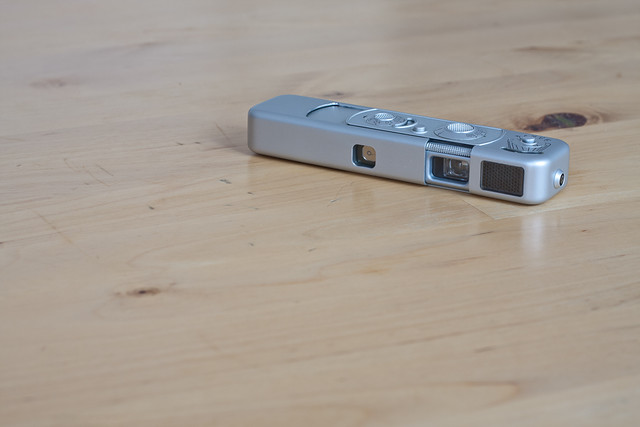
minox b (open)

There has been another bunch of new old cameras that I got out of pure curiosity: the Zeiss Ikon Contaflex (1953-1959), having both the convenience of an SLR and the quirkiness and feel of much older cameras; the subminiature Minox B (1968) with its 8x11 Minox film format that I did not really manage to master yet (but I keep trying!); the Ihagee Parvola 4x6.5 (1933) that is so enjoyable to use on 127 days and is so radically different in design from every other contemporary camera; the Voigtländer Brillant V6 (1937) that I got for next to nothing and which I managed to bring back to working order almost from the trash can and whose pictures, like everything Voigtländer, never ever deceive; and the Voigtländer Inos I (1933?), probably the most battered camera that I own, but worth every pain just for that magical Heliar lens.

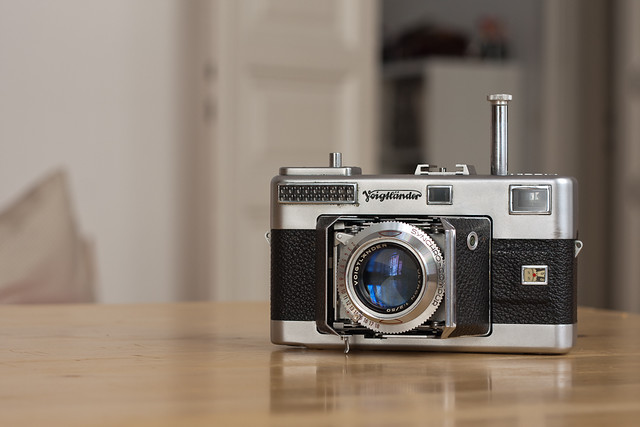
vitessa l

The camera family that has been definitely this year's highlight has been the 35mm rangefinders. It all started with a fascination for the history of the Zeiss Ikon Contax camera: the Kiev 4 (1962), which is a Contax in Soviet disguise has been, in fact, the camera that I used the most in this fourth year. Then came the Voigtländer Vitessa L (1956), for me one of the most elegant cameras ever made and one I am very happy to have not only because of its Ultron lens. A little later, thanks to patience and a bunch of good luck, I got a Zeiss Ikon Contax IIa (1952) well under its true value, without a doubt the camera that I enjoy the most. Then a Kodak Retina II (1949) because of the warm and wonderful Schneider Xenon lens and out of curiosity about the grandmother of our Retinette IA, the one with which everything began. The last addition this year, as it couldn't be otherwise, has been a wonderful Zeiss Ikon Contax II (1936-1937), which is still not working but which I hope I manage to bring back to life soon.

zeiss ikon contax IIa

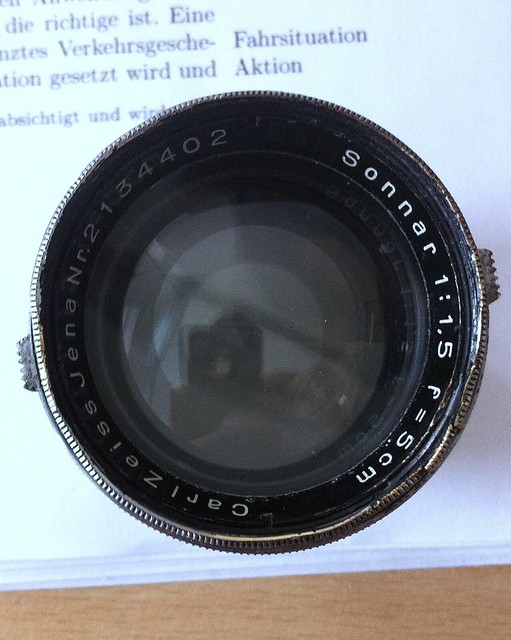
Several of my new old cameras have interchangeable optics. That, of course, opens the door to crave for lenses. In Contaflex mount I managed to find the Pro-Tessar interchangeable front lens elements to extend the standard 50mm Tessar to 35mm, 85mm and 115mm. In Contax/Kiev mount I quickly fell in love with Ludwig Bertele's Zeiss Sonnar formula: first through the Jupiter-8M 50mm f/2.0 (1962) on my Kiev 4, then through the postwar Carl Zeiss Sonnar 50mm f/2.0 (1953-1959) that is the West German recalculation of the original prewar formula. A Jupiter-9 85mm f/2.0 (1963) came along to explore the short telephoto range (which I am still learning to deal with), and a Jupiter-12 35mm f/2.8 (1959), a fine Soviet version of the legendary Zeiss Biogon, covers the wide angle. The latest lens addition, and in fact the lens that I see as my analogversary self-present, is a prewar Carl Zeiss Jena Sonnar 50mm f/1.5 (1937), an ultrafast lens that was the envy of every prewar Leica photographer, and that I plan to make the standard lens for my Contax II, if I manage to make it work. In the meantime I enjoy it on my Contax IIa.

happy 4th analogversary!

(to be continued...)

Tuesday, August 26, 2014

A dream come true - Zeiss Ikon Contax IIa

After the bombing of Dresden in World War II, most of the Zeiss Ikon production facilities were destroyed. Everything was lost: machinery, tools, parts and plans. Gone was what had been Zeiss Ikon's 35mm flagship for the last 15 years, the Contax.

After the war, one branch of the story went to the Ukraine, where the Soviets took a rebuilt Contax production line for what was to become the Kiev camera. The other branch went to Stuttgart, where what remained of Zeiss Ikon in the West started anew in the old Contessa-Nettel production plant.

Zeiss Ikon Stuttgart soon started making finest and ingenious 35mm cameras (Contessa, Ikonta, Contina, later Contaflex, ...), especially thanks to Hubert Nerwin's genius. The Contax IIa (and its light metered sister IIIa) was a complete redesign of the prewar Contax II.

zeiss ikon contax IIa

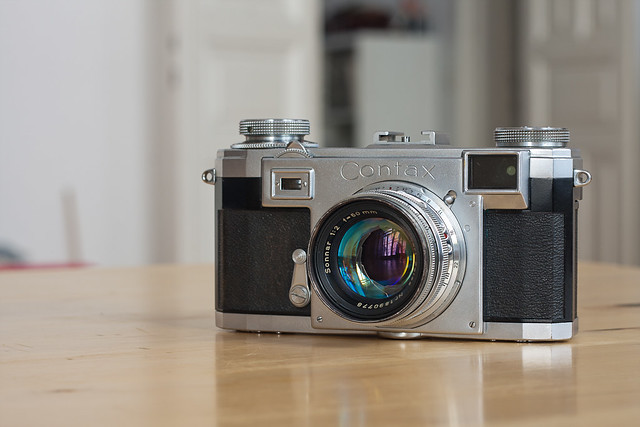
My Zeiss Ikon Contax IIa was built in 1952 and belonged to a gentleman from Berlin, who was a professional musician and passed away only recently. The camera was found in his broom closet after decades of oblivion. Since in the eBay auction the word "contax" was nowhere to be found, it flew under the avid collectors' radars and allowed me to get it for a tiny fraction of its true value.

A little reluctant in the slow speeds at first, some exercise soon helped it fire more and more reliably, like the purebreed it is. Film transport and shutter tensioning has a buttery smooth quality to it that is a joy to operate. The lens, a coated Carl Zeiss Sonnar 50mm 1:2 shows pretty bad separation of the cemented glass elements (as revealed by the iridiscent reflections along the borders) but so far I haven't been able to see any serious impact on the pictures.

When it comes to vintage 35mm rangefinders, it hardly gets any better than this. I'm really happy :)

Zeiss Ikon Contax IIa
My Contax IIa flickr set

Maker Zeiss Ikon
Model Contax IIa 563/24
Type rangefinder system camera
Lens Carl Zeiss Sonnar 50mm f/2.0 (No. 1890778, 1953-1959)
Shutter Contax, 1 - 1/1250 + B + T
Film type 35mm 24x36
Year January-May 1952
Country West Germany

Thursday, July 24, 2014

Old-school engineering - Zeiss Ikon Contaflex IV

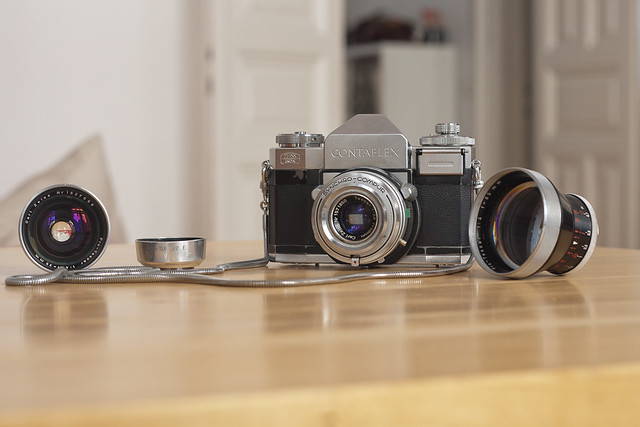
The Zeiss Ikon Contaflex IV is a dinosaur, a member of the now extinct family of 35mm leaf-shuttered SLR cameras, that were fashionable in the 50s-60s but which eventually had to surrender to the superiority of the focal plane shutter SLR concept, the one that was to dominate the photographic scene for the following decades.

Having a leaf shutter between the lens elements makes everything difficult: shutter has to remain open at full aperture for the viewfinder to work, and an additional shutter curtain must block the light path on the film gate. When pressing the shutter button a complicated sequence of events must take place quite fast: shutter closes, aperture closes to the desired f-stop, mirror and rear shutter curtain go up, shutter opens and closes to expose the film. In this camera, this means the viewfinder goes black after taking the picture (no instant return mirror), so you have to operate the film advance for the remaining operations to take place: advance film, bring down shutter curtain and mirror, cock the shutter and open it again at full aperture for the viewfinder to be available again. And all this must happen, mind you, by purely mechanical means.

zeiss ikon contaflex iv

In addition, the shutter between the lens elements prevents the use of fully interchangeable optics. In this model (the Contaflex IV), the front element of the 50mm f/2.8 Tessar is removable and can be replaced by one of the pictured dedicated Pro-Tessar lens for focal lengths of 35mm and 85mm (there was a 115mm Pro-Tessar, too).

Zeiss engineers were not known for scaring away of almost unsolvable mechanical problems. They did it, yes, but this camera represents a Darwinian dead end in camera design evolution. But what a joy it is to use it, in spite of all its shortcomings. How surprisingly small and well balanced it feels in your hands. How precisely machined it is, jewel-like, how reassuringly easy it is to operate the film advance, considering all that is happening inside.

Zeiss Ikon Contaflex IV
My Contaflex IV flickr set

Maker Zeiss Ikon
Model Contaflex IV 864/24
Type single lens reflex camera
Lens Carl Zeiss Tessar 50mm f/2.8 (No. 1571850, 1953-1959)
Lens Carl Zeiss Pro-Tessar 35mm f/4.0 (No. 1627658, 1953-1959)
Lens Carl Zeiss Pro-Tessar 85mm f/4.0 (No. 1883566, 1953-1959)
Shutter Synchro-Compur MXV, 1 - 1/500 + B
Film type 35mm 24x36
Year 1957-1959
Country West Germany

Friday, March 14, 2014

A German camera made in the Ukraine - Arsenal Kiev 4

Back in 1932, the giant Zeiss Ikon conglomerate decided to bring a 24x36 rangefinder camera with interchangeable optics to the market, not wanting to loose customers and reputation to Ernst Leitz from Wetzlar. This was the birth of the legendary Contax, which some sources say it was designed to be superior to the Leica in every way.In fact, most features implemented in the Contax are natural extensions of Zeiss Ikon's gathered know-how, ranging back to the pre-merger companies.

The Contax, though, has a fascinating history after WWII, which saw entire production lines, machinery and experts from the original Zeiss Ikon factory in Dresden taken by the Russians to the former military arsenal in Kiev, Ukraine (then Soviet Union) as war reparations.

kiev 4

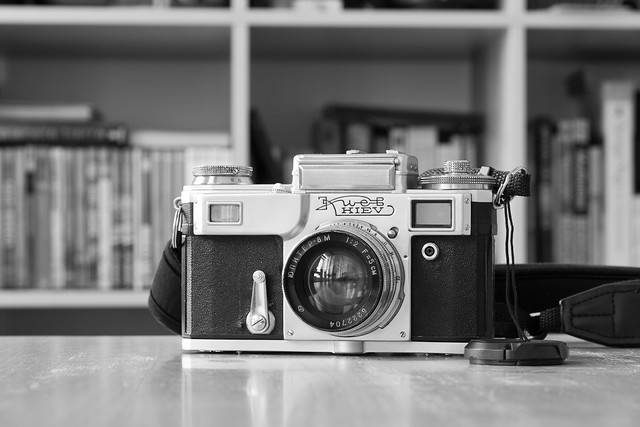
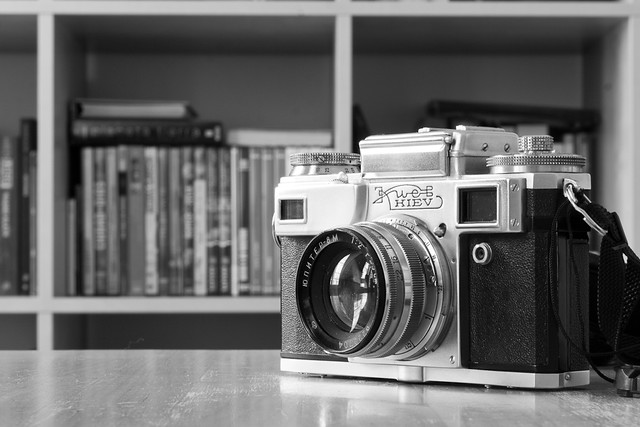
The cameras made by Arsenal Kiev are, in fact, neither Russian plagiarisms nor low-quality camera, as is the reputation of many Soviet cameras, but much more "a German camera built in the Soviet Union". Although quality standards and craftmanship levels decreased steadily along the Kiev's extremely long production run (1949-1984), this Kiev 4 exemplar from 1962 seems to work smoothly after more than fifty years. The lens, a Jupiter-8M is a fine copy of the legendary Carl Zeiss Sonnar 50mm f/2 from the original Contax.

kiev 02

I acquired this camera because Kievs still have a moderate price tag and my morals prevented me from paying the ridiculously high prices that a Contax can reach. In fact, I got a pretty good deal on this camera, considering its condition.

Let me introduce you to my first rangefinder system camera :)

Arsenal Kiev 4
My Kiev 4 flickr set

Maker Arsenal
Model Kiev 4
Type rangefinder system camera
Lens Arsenal Jupiter-8M 50mm f/2.0 (No. 6222704, 1962)
Lens KMZ Jupiter-12 35mm f/2.8 (No. 5911210, 1959)
Lens LZOS Jupiter-9 85mm f/2.0 (No. 6303583, 1963)
Shutter Contax, 1/2 - 1/1250 + B
Film type 35mm 24x36
Year 1962
Country Soviet Union

Tuesday, April 10, 2012

The Voigtländer effect - Voigtländer Vitomatic Ia

Sometimes the things that came to you almost by chance, without having planned anything, are the ones that you end up loving the most. I got my Voigtländer Vitomatic Ia thanks to the selling eagerness of my favorite camera dealer, who is always willing to let out as much of his stuff as possible, probably with his retirement already in mind.

vitomatic 03
(EOS 40D, Sigma EX DG 50mm f/2.8 macro, 1/15, f/11, ISO 100)

When you hold the Vitomatic in your hands for the first time, its heavy weight comes as a surprise. Few moments afterwards, you realize that someone spent a lot of thought designing this machine. Every single control (shutter release, focusing ring, film advance lever, aperture/speed setting ring) is exactly where your fingers expect it to be, ready to be operated and remaining discreetly out of the way when you don't need them.

The Vitomatic's construction is solid as a tank, and the quality of the used materials is A+. Every single part is machined to amazing precision, which makes possible a crisp and round operation. The shutter release is especially worth mentioning, because if you press it slowly and carefully, it reaches a point where it just kind of shoots by itself, with no apparent pressure coming from your finger. This feature, together with the sleek leaf shutter and the heaviness of the body, allow for virtually no camera shake at insanely slow speeds (1/15 and even 1/8 being no real problem for a reasonably steady hand). The swiveling mirror of a single-lens reflex camera can only dream of such a shake-free shooting quality.


Another very interesting feature of the Vitomatic is its bright life-size viewfinder, that is cleverly positioned so that you can look through it with your right eye while keeping your left eye open. The 1x magnification creates the optical illusion of a frame floating in the air. Combined with the projection of the match-needle light meter situated on the camera top onto the viewfinder (which, incidentally, is the feature that distinguished the Ia from the I model), this feature makes the Vitomatic a really quick shooter. The solid, single stroke film advance lever only adds up to the shooting readiness.

But the most amazing feature of the Vitomatic Ia is its lens, a coated Voigtländer Color-skopar 50mm 1:2.8 that is capable of rendering images with virtually infinite sharpness. The level of detail that this lens is able to produce is truly incredible. The design of the Color-Skopar comprises 4 elements in 3 groups, a classic Zeiss Tessar design. Voigtländer really knew how to take the most out of this killer design. The Vitomatic uses unit focusing, which means the whole lens, and not only the front cell, as is most common in this kind of camera, moves forwards and backwards to focus. This contributes to even more sharpness. The shutter blades are behind the rear cell.

vitomatic 04
(EOS 40D, Sigma EX DG 50mm f/2.8 macro, 0.6s, f/5.6, ISO 100)

The Vitomatic Ia is a clear example of what I like to call the "Voigtländer effect". This is the realization, as soon as you hold a Voigtländer camera, that these are devices made for a lifetime, where cutting costs in the quality of the materials or the build was never an issue. When you hold a good Voigtländer exemplar in your hands, you understand what camera design is all about.

Voigtländer Vitomatic Ia
My Vitomatic Ia flickr set


Maker Voigtländer
Model Vitomatic Ia
Type viewfinder camera
Lens Voigtländer Color-Skopar 50mm f/2.8 (No. 6452606, ~1964)
Shutter Prontor 500-SLK, 1 - 1/500 + B
Film type 35mm 24x36
Year 1960-1964
Country West Germany

Sunday, November 20, 2011

The old lady - Zeiss Ikon Ideal 250/3

The principle behind photography is fairly simple: you just need a dark space where light can enter through a hole in a controlled way and some kind of light-sensitive receptor material (silver halide salts or CMOS semiconductors). This dark space (or camera obscura) is, of course, the photographic camera. Every photographic device in the world, no matter how fancy, no matter how hi-tech, relies on this principle. My oldest camera (for now) is a Zeiss Ikon Ideal 250/3 UU and its design, operation and engineering bring my thoughts back to this principle every single time I hold it in my hands.

the old lady - zeiss ikon ideal 250/3 (+3)
(EOS 40D, Sigma EX DG 50mm f/2.8 macro, 0.8s, f/10, ISO 100)

The Ideal 250/3 is a folding bed plate camera that takes pictures on 6.5x9 sheet film. It sports an uncoated Carl Zeiss Jena Tessar 120mm f/4.5 lens in a rim-set Compur shutter with a maximum speed of 1/250. It was made by Zeiss Ikon in Dresden, Germany some time around 1930, making it actually a proud more-than-80-year-old camera that still works and is able to take great pictures.

tancada
(EOS 40D, Sigma EX DG 50mm f/2.8 macro, 3.2s, f/11, ISO 100)

When closed, the Ideal is no bigger than a pocket book. It is first when you open it and the front standard (lens and shutter mount) snaps into place at the infinity stop that you realize that this is a camera built for a lifetime, and even longer.

Operating a plate camera is quite different than using other types of cameras, or at least it looks so. In fact, with a plate camera you have to take care of many operations that other cameras are able to do for you. To take a picture with the Ideal, you first open the shutter in the T setting to project the image going through the lens onto a ground glass screen that is attached to the camera back. This screen is used to adjust focus and framing. The projected image is quite dim and difficult to figure out, especially in broad daylight. That's why you need to block as much ambient light as you can for example with a dark cloth, the same dark cloth that the photographer uses to cover his head that is still a universally recognizable symbol for a photographer. In the Ideal, a black hood unfolds and allows to see the screen in its shade.

ground glass (+6)
(EOS 40D, Sigma EX DG 50mm f/2.8 macro, 1.3s, f/9, ISO 100)

The image projected onto the ground glass, like all images going through a photographic lens, is reversed upside-down and right-to-left. This makes framing and composing a picture a hard task, although I also think that precisely this reversed image puts enough distance between the reality that you are photographing and the reality that you see through the camera, making the casual snapshot virtually impossible but allowing for much more thoughtful and elaborated compositions. Reversed images and, in general, cameras that are hard to use, make you, I believe, a better photographer.

double extension bellows
(EOS 40D, Sigma EX DG 50mm f/2.8 macro, 1.3s, f/9, ISO 100)

The focus is adjusted by turning a knob that moves the front standard (that is, the plane where the lens and shutter stand) closer or farther away from the rear standard (the plane where the film or the ground glass focusing screen stands). A magnifying glass is of great help to accurately judge focus on the screen. The bellows can extend to double the length of the camera, allowing for really amazing close-up focusing. Another nice feature of the Ideal is that the front standard has the possibility to have shift and rise/fall movements, which are very useful to correct perspective. The bigger version of the Ideal (the 250/7 for 9x12 plates) can also tilt the rear standard to take full advantage of the Scheimpflug principle, but with my little 6.5x9 camera I can only make a "quasi-Scheimpflug" effect by partially folding the camera back.

movements
(EOS 40D, Sigma EX DG 50mm f/2.8 macro, 1s, f/9, ISO 100)

Suppose we have found a pleasant framing, that focus is adjusted and that we like what we see on the screen. Without moving the camera, the ground glass screen must now be removed from the camera back and replaced by the film, in order to capture exactly the desired image on it. For that, a film holder is attached to the camera back, exactly in the same position where the ground glass screen was. This film holder is a light-tight cartridge containing one sheet of film, with a removable dark slide that must be taken off to take the picture. Of course, loading the film into the holder is something that must be done in absolute darkness. For that matter, I had to get myself a changing bag, which is basically a big light-tight black bag with holes for your arms, where you can load and unload film sheets even if you don't have a darkroom. After a little practice, your hands quickly learn to operate without the aid of your eyes.

Now the film holder is in place and it is time to evaluate and set exposure: shutter speed and aperture. Then, after double-checking that the holder is firmly attached to the camera back, carefully remove the dark slide, cock the shutter and take your picture. Then put the dark slide carefully back into place and you can remove the film holder from the camera. If you want to take more pictures, you need additional film holders loaded with unexposed film sheets. I got four film holders with my Ideal. That is the maximum number of pictures that I am able to take on sheet film on a photo walk with my Ideal... ;)


The format of sheet film that the Ideal takes, 6.5x9cm, was fairly common in 1930 but now there are no new cameras made to use it. Fortunately, some film manufacturers like Efke in Croatia and Spürsinn and Fotoimpex in Germany still cut film in this format. Only black and white, though. As I got the Ideal I also bought a package of 50 sheets of ADOX CHS 100. But I have only used 2 sheets so far, because at a proud 6€ lab development cost per sheet, this is something that clearly calls for home development. Some day...

roll film adapter 02
(EOS 40D, Sigma EX DG 50mm f/2.8 macro, 2s, f/11, ISO 100)

Fortunately, there is something called a roll film adapter, which is attached to the camera back like the film holders, but is designed to contain a standard roll of 120 film, the same medium format film that I use with other cameras. This roll film adapter allows taking pictures in 6x9 format, which is almost as big as the original sheet film. Roll film adapters were very common in the golden age of plate cameras (between the beginning of the 20th century and World War II) and there were adapters made for every camera in the market. Because the way holders attach to the camera back was by no means standardized: each camera maker, and even each camera model, had its own system and compatibility was rare, meaning that you have to use the film holders and roll film backs designed specifically for your camera model. I was lucky enough to get film holders that fit the Ideal when I got the camera, but the roll film adapter was a whole other story. Because the Ideal, to make things funnier, uses a very comfortable but at the same time extremely unusual snap-in system for attaching the film holders.

mounted
(EOS 40D, Sigma EX DG 50mm f/2.8 macro, 1/50, f/2.8, ISO 500)

On my last visit to Vienna, I asked the man in the Leica vintage shop if they would have a compatible roll film adapter and handed him the camera. He went inside and, after almost twenty minutes, he came out again with a couple of adapters that would more or less fit. The one that I eventually got was the only one that attached really firmly to the camera back, but it was not conceived for an Ideal back. It lacked a light trap on top, but unfortunately I had to ruin two rolls of film almost completely before noticing the light leak (*). A small felt strip wrapped in gaffer tape, attached at the right place on the roll film adapter with some more gaffer tape does the trick and makes the camera pretty much light-tight. This means that I am able to use any kind of 120 film I want with the Ideal. Even my beloved Velvia color slides!

To use the Ideal is really a joy. Its small size makes it easy to carry around and, once unfolded, it is for sure going to attract curious looks. This is not a camera for casual snapshots, and even less for quick action: other camera types are much more suited for such purposes. The Ideal is the perfect camera for slow photography, quite often using tripod, for taking your time to think about what you are doing before shooting. Because the process is complex and the steps must be done in the right order.

nom
(EOS 40D, Sigma EX DG 50mm f/2.8 macro, 1/40, f/5.6, ISO 100)

Using the Ideal makes me strangely happy. I guess it is not only because of some masochistic fun in needing longer than one minute to take a picture, but because it conveys a sense of being doing real photography, focusing on the ground glass and then changing to the film back makes me feel that I am playing with the big boys now, it is almost large format photography with a view camera. It brings me close to the origins, it makes me feel like a photographic pioneer. But the main reason of this strange happiness is, I guess, being able to take pictures with a camera that is still working after more than 80 years. That's more than twice my age. None of my still living grandparents was even born as my Ideal left the Zeiss Ikon factory. Kind of the ultimate dream of every vintage camera lover.

Zeiss Ikon Ideal 250/3
My Ideal 250/3 flickr set

Maker Zeiss Ikon
Model Ideal 250/3 UU
Type folding bed plate camera
Lens Carl Zeiss Jena Tessar 120mm f/4.5 (No. 1038494, 1930)
Shutter Compur, rim set, 1 - 1/250 + B + T (No. 1070662, 1930)
Film type sheet film 6.5x9
Year ~1930
Country Germany


(*) some of the pictures, though, look kind of dreamy, light leaks are not always bad!