Friday, November 21, 2014

good luck [stranger 22/99]

good luck [stranger 22/99]
(Kiev 4, Jupiter-12, Kodak Elite Chrome Extra Color 100, ISO 100/21°)

My twenty-second stranger, fully equipped, was really committed to the business of bringing us good luck.

Sunday, September 28, 2014

Series - burggasse

The last year and a half we lived in the Burggasse in Vienna. This summer we moved to a new flat. This weekly series is a very personal recollection of the flat that we just left.

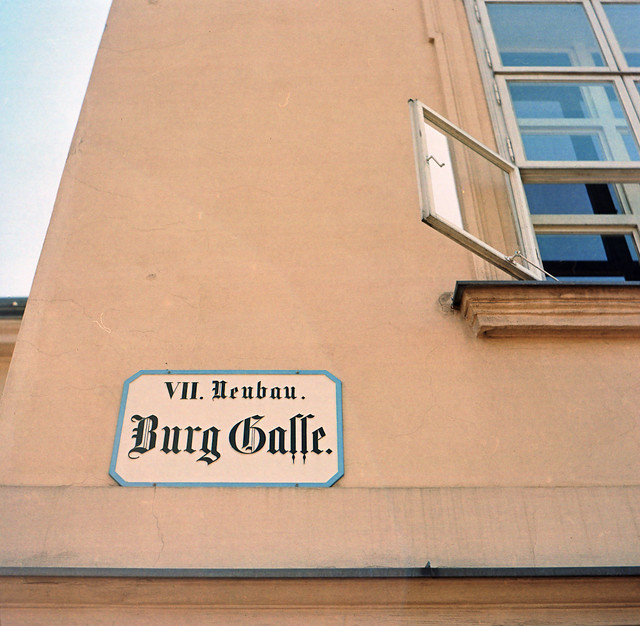
burg gasse
(Super Ikonta BX 533/16, Kodak Ektar 100, ISO 100/21°)

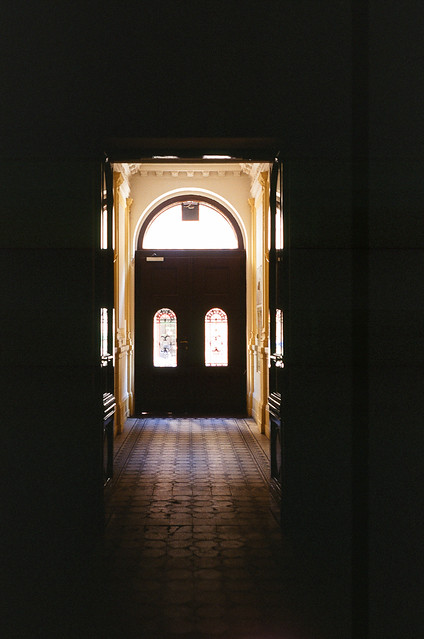
entrance
(Kiev 4, Kodak Elite Chrome Extra Color 100, ISO 100/21°)

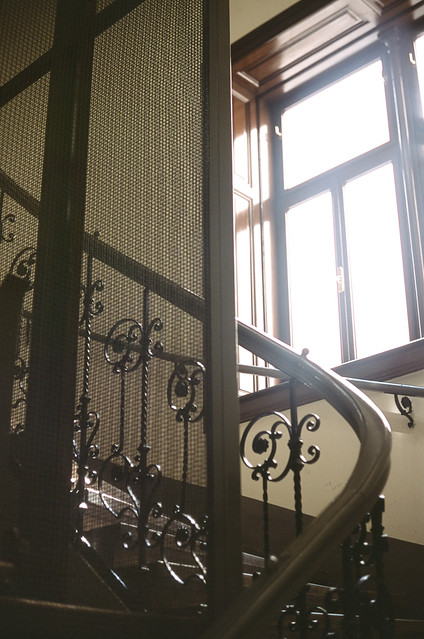
staircase...
(Vitessa L, Agfaphoto CT Precisa 100, ISO 100/21°)

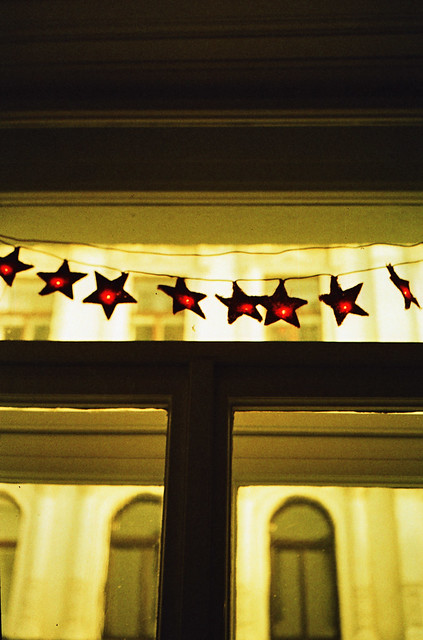
x-pro stars
(Rollfilm 5x8, Rollei Crossbird 200, ISO 200/24°)

moldura
(Contaflex IV, Fujichrome Velvia 50, ISO 50/18°)

rainbow maker
(Contaflex IV, Fujichrome Velvia 50, ISO 50/18°)

caseta vella (33/52)
(Rollei 35, Solution Super VX 200, expired, ISO 200/24°)


Tuesday, August 26, 2014

A dream come true - Zeiss Ikon Contax IIa

After the bombing of Dresden in World War II, most of the Zeiss Ikon production facilities were destroyed. Everything was lost: machinery, tools, parts and plans. Gone was what had been Zeiss Ikon's 35mm flagship for the last 15 years, the Contax.

After the war, one branch of the story went to the Ukraine, where the Soviets took a rebuilt Contax production line for what was to become the Kiev camera. The other branch went to Stuttgart, where what remained of Zeiss Ikon in the West started anew in the old Contessa-Nettel production plant.

Zeiss Ikon Stuttgart soon started making finest and ingenious 35mm cameras (Contessa, Ikonta, Contina, later Contaflex, ...), especially thanks to Hubert Nerwin's genius. The Contax IIa (and its light metered sister IIIa) was a complete redesign of the prewar Contax II.
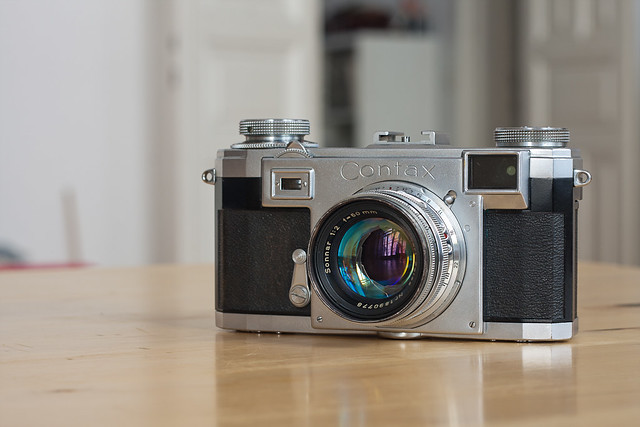
zeiss ikon contax IIa

My Zeiss Ikon Contax IIa was built in 1952 and belonged to a gentleman from Berlin, who was a professional musician and passed away only recently. The camera was found in his broom closet after decades of oblivion. Since in the eBay auction the word "contax" was nowhere to be found, it flew under the avid collectors' radars and allowed me to get it for a tiny fraction of its true value.

A little reluctant in the slow speeds at first, some exercise soon helped it fire more and more reliably, like the purebreed it is. Film transport and shutter tensioning has a buttery smooth quality to it that is a joy to operate. The lens, a coated Carl Zeiss Sonnar 50mm 1:2 shows pretty bad separation of the cemented glass elements (as revealed by the iridiscent reflections along the borders) but so far I haven't been able to see any serious impact on the pictures.

When it comes to vintage 35mm rangefinders, it hardly gets any better than this. I'm really happy :)

Zeiss Ikon Contax IIa
My Contax IIa flickr set

Maker Zeiss Ikon
Model Contax IIa 563/24
Type rangefinder system camera
Lens Carl Zeiss Sonnar 50mm f/2.0 (No. 1890778, 1953-1959)
Shutter Contax, 1 - 1/1250 + B + T
Film type 35mm 24x36
Year January-May 1952
Country West Germany

Thursday, July 24, 2014

Old-school engineering - Zeiss Ikon Contaflex IV

The Zeiss Ikon Contaflex IV is a dinosaur, a member of the now extinct family of 35mm leaf-shuttered SLR cameras, that were fashionable in the 50s-60s but which eventually had to surrender to the superiority of the focal plane shutter SLR concept, the one that was to dominate the photographic scene for the following decades.

Having a leaf shutter between the lens elements makes everything difficult: shutter has to remain open at full aperture for the viewfinder to work, and an additional shutter curtain must block the light path on the film gate. When pressing the shutter button a complicated sequence of events must take place quite fast: shutter closes, aperture closes to the desired f-stop, mirror and rear shutter curtain go up, shutter opens and closes to expose the film. In this camera, this means the viewfinder goes black after taking the picture (no instant return mirror), so you have to operate the film advance for the remaining operations to take place: advance film, bring down shutter curtain and mirror, cock the shutter and open it again at full aperture for the viewfinder to be available again. And all this must happen, mind you, by purely mechanical means.

zeiss ikon contaflex iv

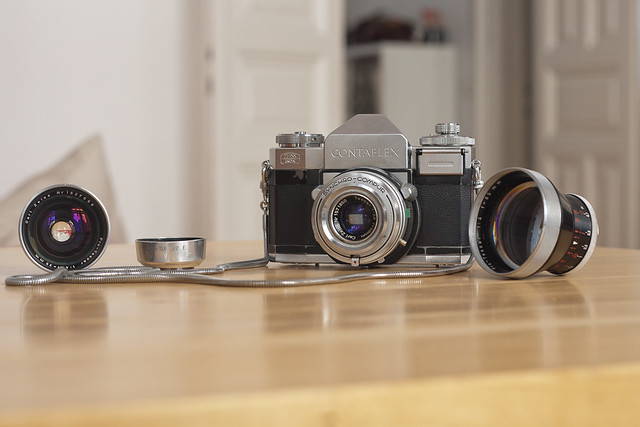
In addition, the shutter between the lens elements prevents the use of fully interchangeable optics. In this model (the Contaflex IV), the front element of the 50mm f/2.8 Tessar is removable and can be replaced by one of the pictured dedicated Pro-Tessar lens for focal lengths of 35mm and 85mm (there was a 115mm Pro-Tessar, too).

Zeiss engineers were not known for scaring away of almost unsolvable mechanical problems. They did it, yes, but this camera represents a Darwinian dead end in camera design evolution. But what a joy it is to use it, in spite of all its shortcomings. How surprisingly small and well balanced it feels in your hands. How precisely machined it is, jewel-like, how reassuringly easy it is to operate the film advance, considering all that is happening inside.

Zeiss Ikon Contaflex IV
My Contaflex IV flickr set

Maker Zeiss Ikon
Model Contaflex IV 864/24
Type single lens reflex camera
Lens Carl Zeiss Tessar 50mm f/2.8 (No. 1571850, 1953-1959)
Lens Carl Zeiss Pro-Tessar 35mm f/4.0 (No. 1627658, 1953-1959)
Lens Carl Zeiss Pro-Tessar 85mm f/4.0 (No. 1883566, 1953-1959)
Shutter Synchro-Compur MXV, 1 - 1/500 + B
Film type 35mm 24x36
Year 1957-1959
Country West Germany

Wednesday, July 9, 2014

sofortdienst [stranger 21/99]

sofortdienst [stranger 21/99]
(Rollfilm 5x8, Rollei Crossbird 200, ISO 200/24°, cross-processing)

My twenty-first stranger was talking on the phone.